In June 2026, Kids Rights Canada had distinct honor of presenting at the University of Moncton’s International Summer Course on the Rights of the Child. Heidi and Charlotte took the stage to share our latest community-based research: bringing children’s voices into the conversation about Artificial Intelligence.
Moving Beyond the “Protection-Only” Paradigm
Currently, there is a dominant public narrative in Canada that frames digital platforms and AI as threats to child development. While safeguarding children is paramount, this “protection-only” approach often relies on adult assumptions and limits children’s digital agency. During our session, we advocated for a shift toward an empowerment approach — a framework that ensures children have the digital literacy to understand AI, the tools to stay safe, and a meaningful voice in how these systems are designed.
Our Play-Based Methodology
We shared about our play-based workshops with children in Toronto. Through scenario games, open conversations, and creative drawing exercises, we empowered children as young as eight to connect their fundamental rights to their everyday experiences with technology.
What the Children Told Us
We also shared about the insights and findings we gathered from our play-based research activities. When we gave children the space to speak for themselves, they proved to be highly critical and insightful digital citizens. They outlined a clear picture of AI’s strengths and its critical blind spots:
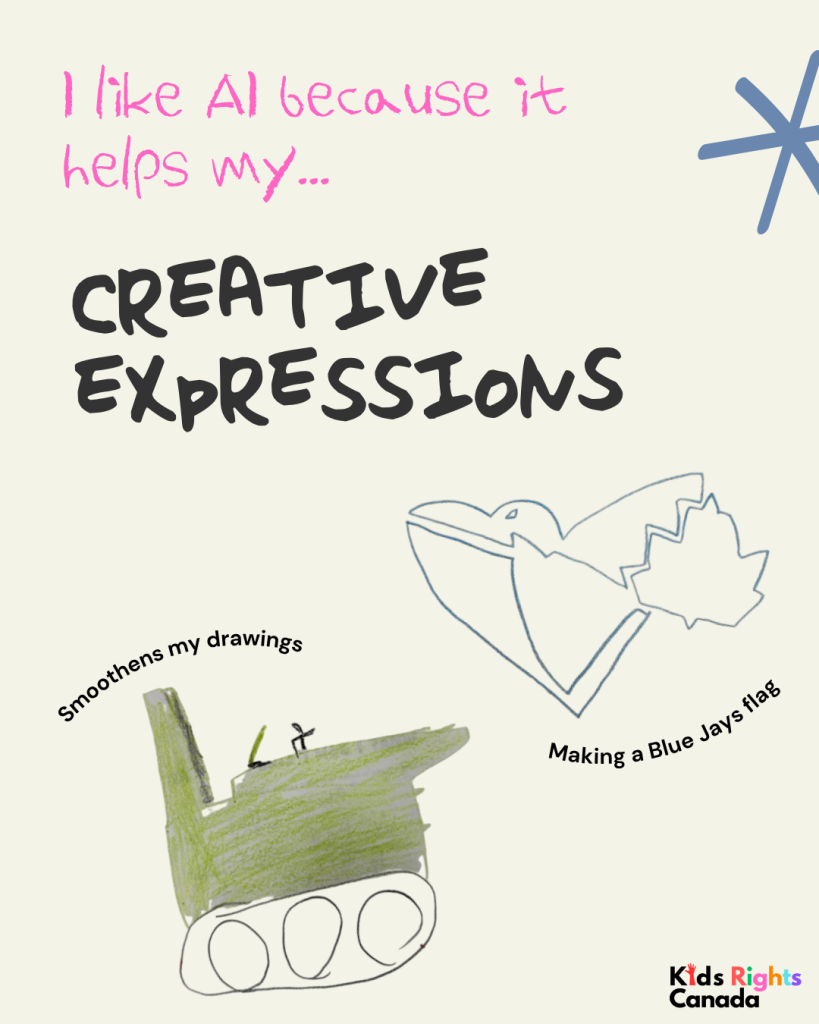
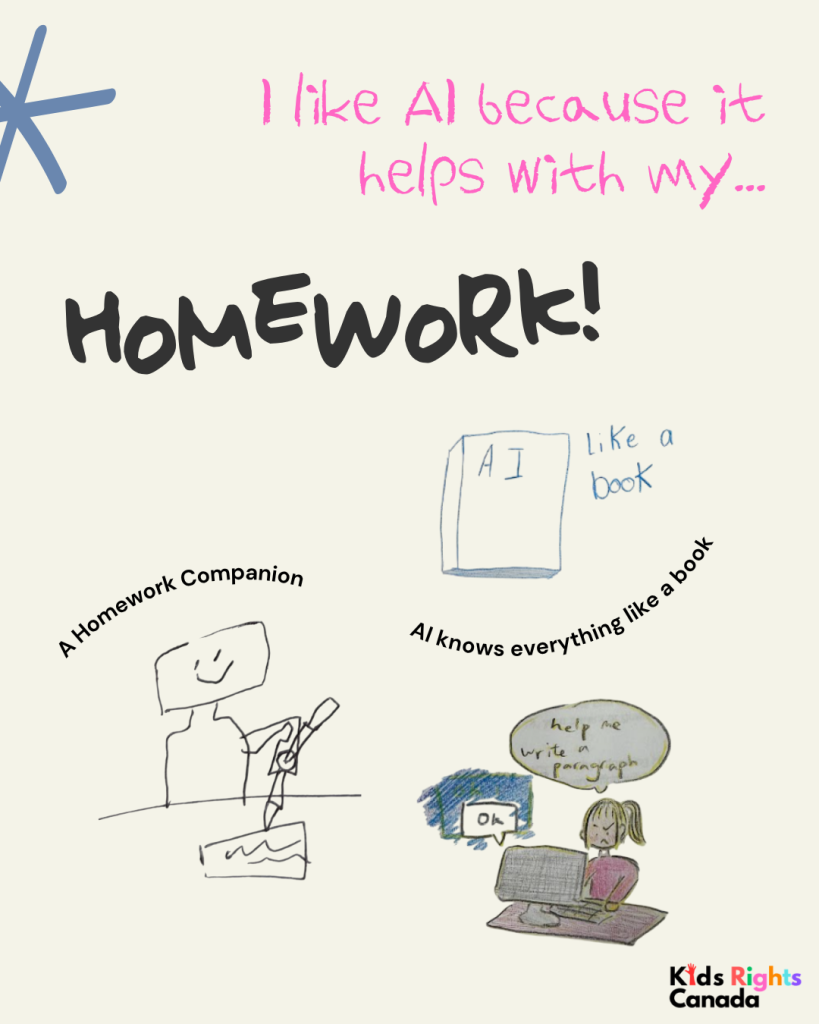
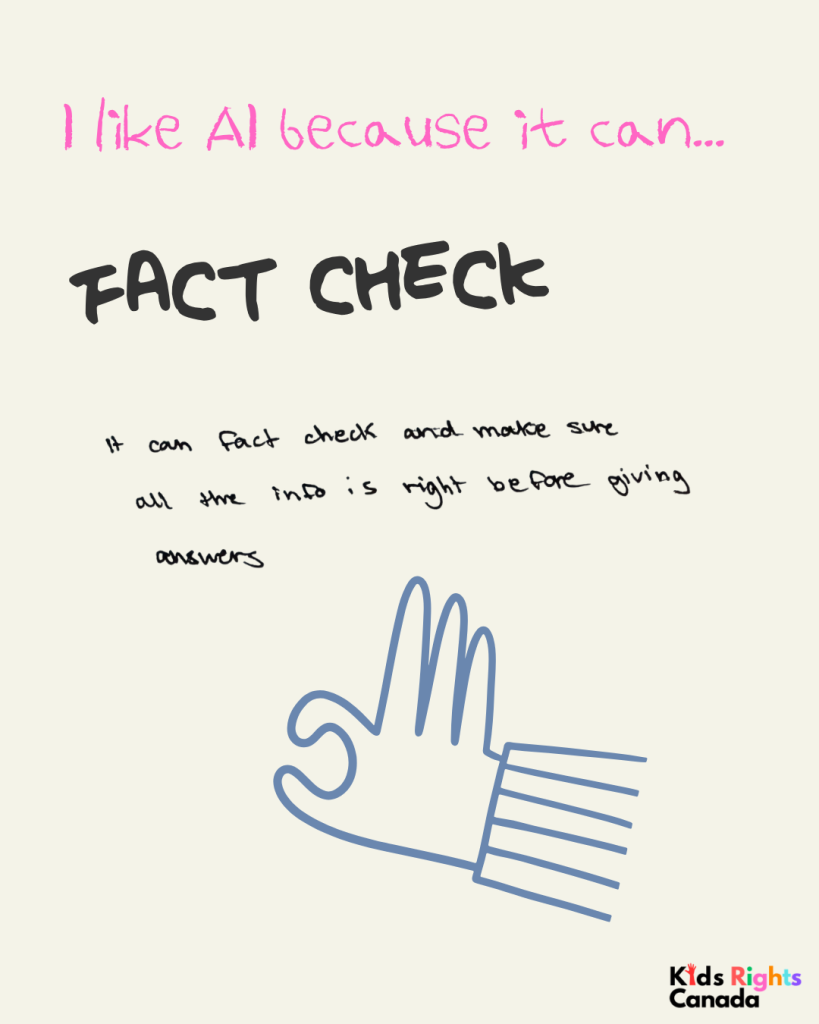
- Building Capabilities: Children do not just see AI as a search engine; they view it as a collaborative partner. They actively use it to boost their creative expressions, assist with homework, and fact-check information.
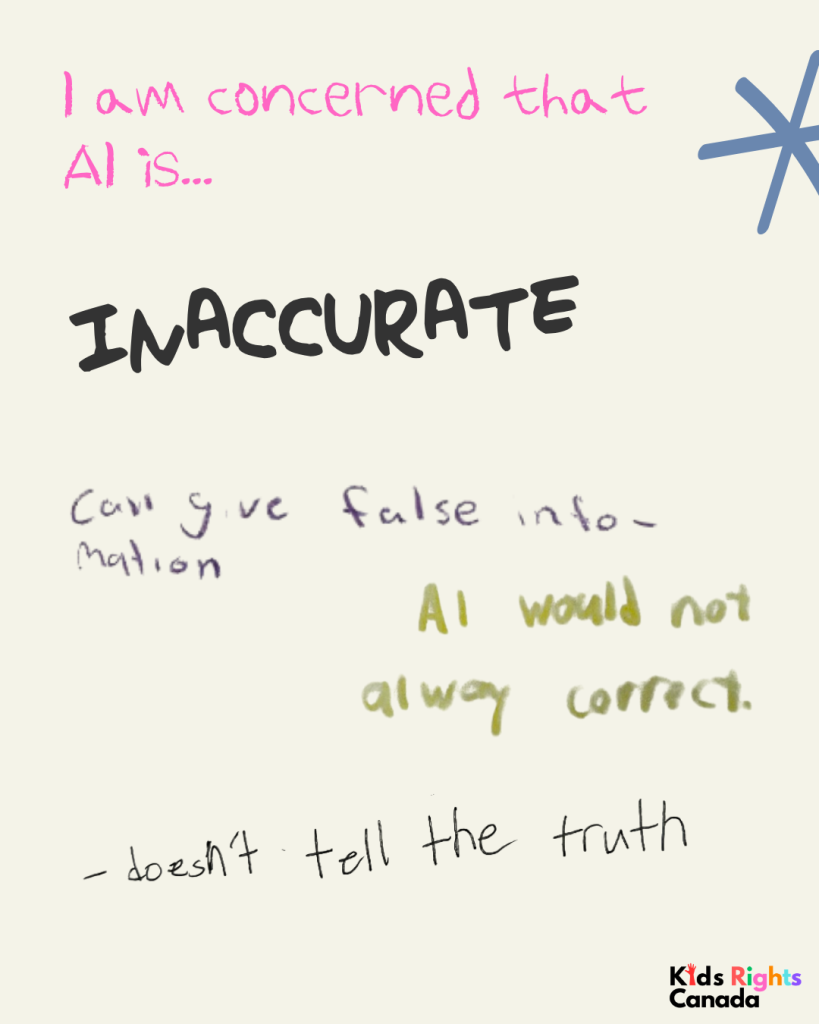
- System Inaccuracies: Youth are keenly aware of AI “hallucinations,” openly noting that the technology “doesn’t tell the truth” and can spread false information.
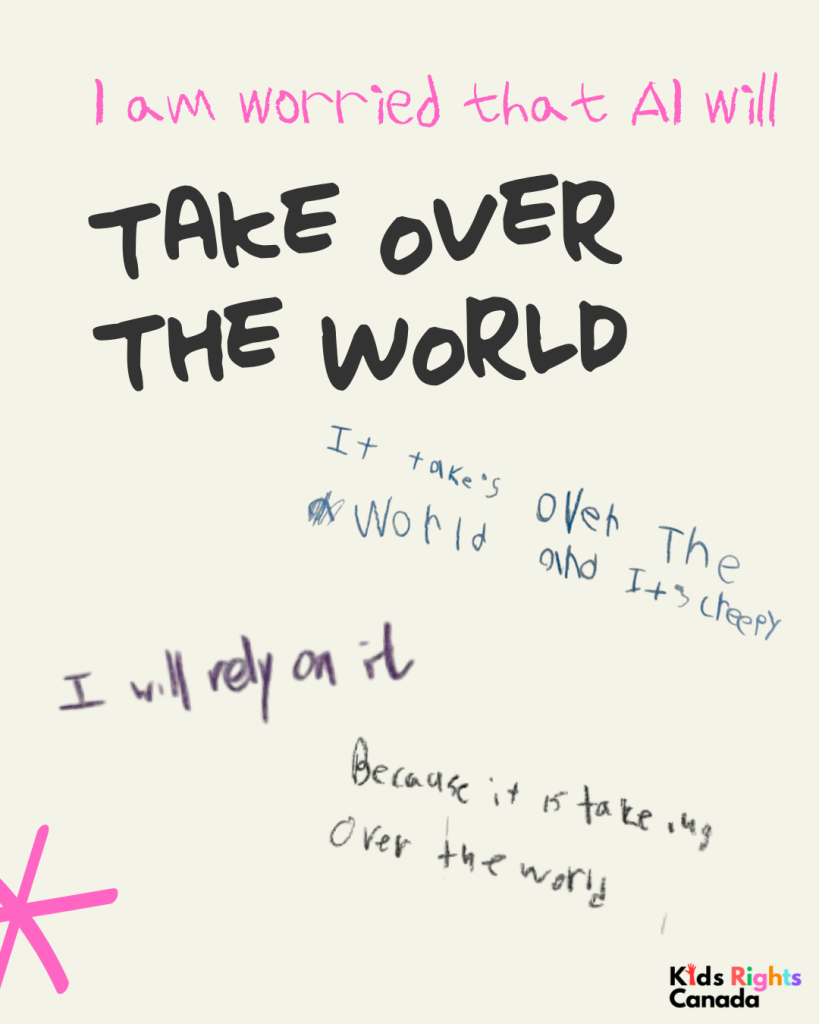
- Existential Anxieties: Rather than immediate privacy concerns, many children carry deep, science-fiction-like fears about AI’s long-term impact on humanity and the future of the workforce.
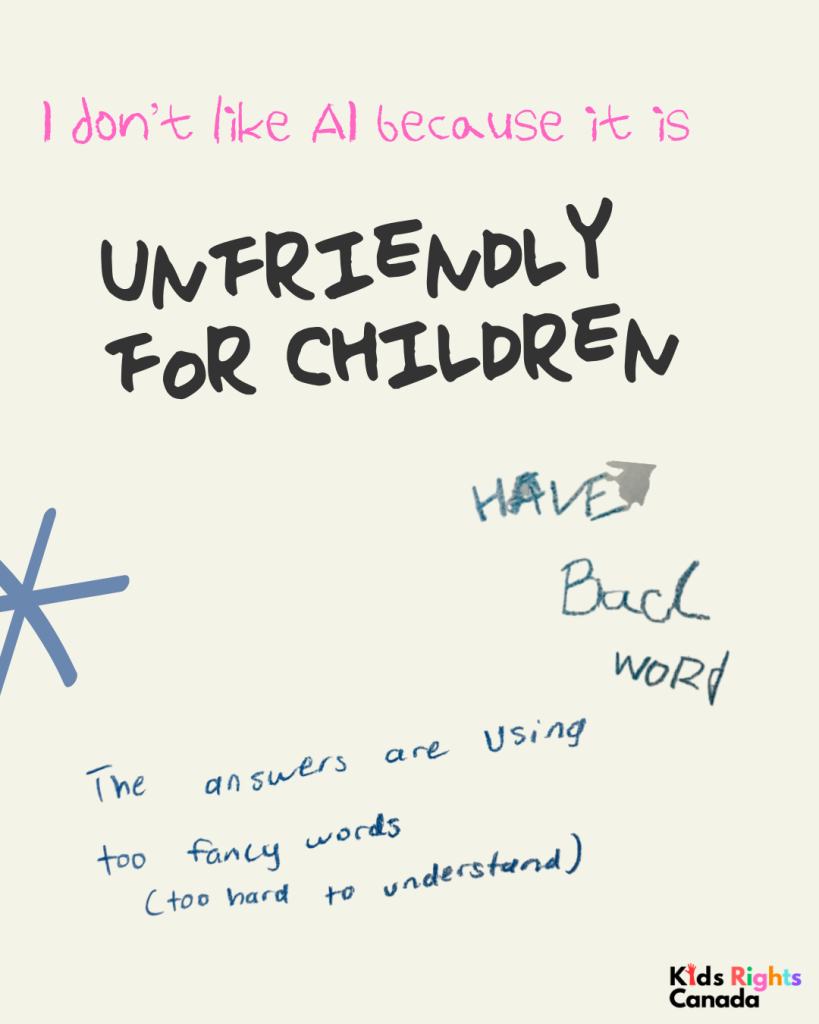
- Unfriendly Interfaces: Children are frustrated by platforms that rely on “too fancy words” and complex adult jargon, which immediately creates a barrier to their participation.
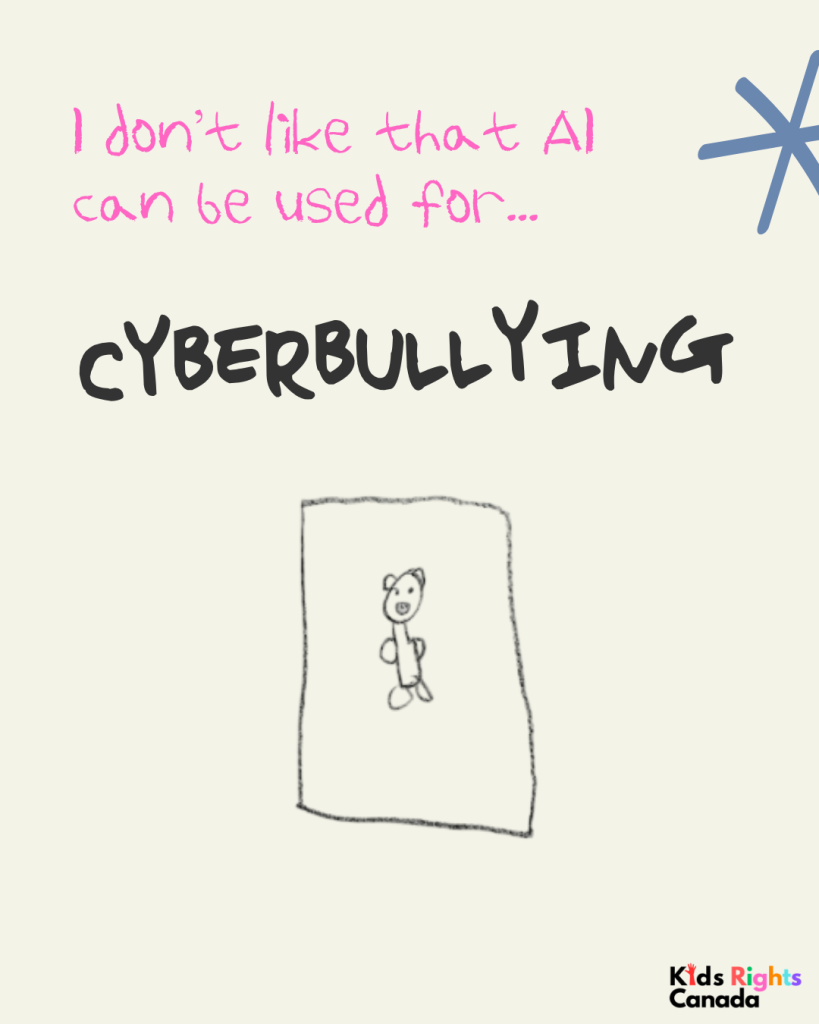
- Real-World Harm: Most distressingly, participants shared personal experiences of AI being weaponized for cyberbullying, such as maliciously altering photographs of peers.
Co-Designing a Better Digital Future
The insights we gathered serve as an essential blueprint. A system that is unsafe, misleading, or easily weaponized against a child is fundamentally flawed for society at large.
Our ultimate takeaway for the researchers, professionals, and policymakers at the Summer Course was a direct call to action: we must mandate child participation in AI policy drafting and platform design. Listening to children does not just protect them; it empowers us to build a safer, more transparent, and more ethical internet for everyone.
Find out more about the summer course: https://www.umoncton.ca/droitsdelenfant/en